From Resistance to Cultural Power: From Recognition to Continuity
Roots Reggae is more than music. It is a living Indigenous culture born from people who transformed the wounds and conversions of enslavement, colonialism and down-pression into sound, turning struggle into rhythm, resistance into song, and lived experience into a culture that could not be silenced. What emerged from Jamaica was more than a musical form. Roots Reggae became a vessel for memory, dignity, consciousness, spirituality and the determination of a people to speak, create and shape their own future.
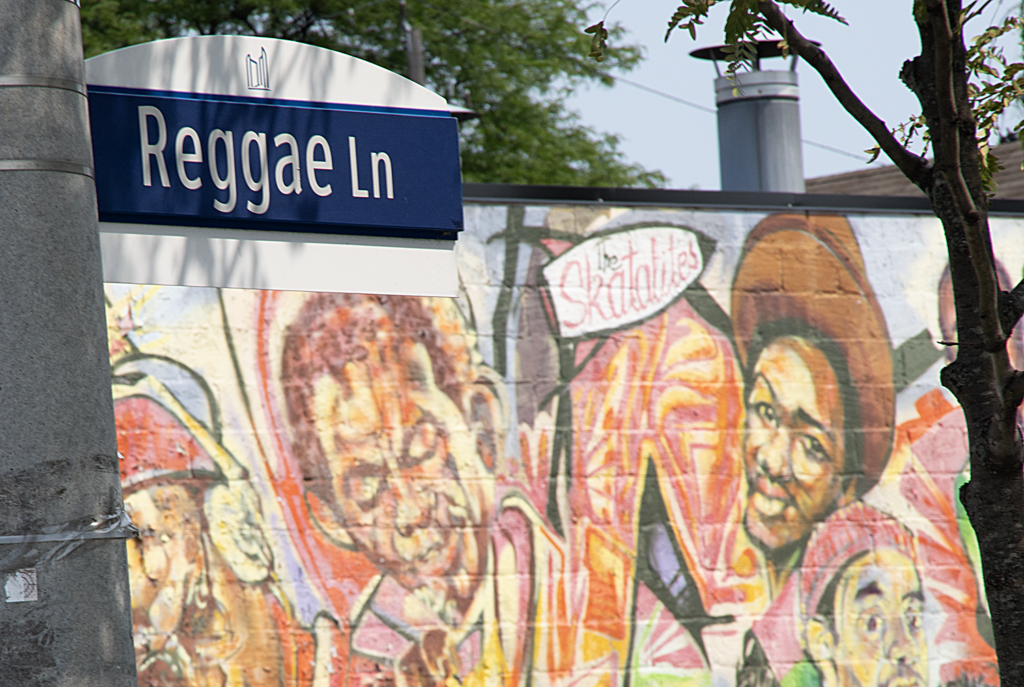
That spirit travelled with the people who came to Toronto. Beginning in the 1960s, Jamaican migration helped establish a vibrant cultural presence along Eglinton Avenue West. Musicians, producers, sound operators, record dealers, entrepreneurs, promoters and community builders created a network of businesses, gathering places and cultural spaces where music, commerce and community became inseparable. The City of Toronto’s Little Jamaica Cultural District Plan acknowledges that “the role that reggae music played in putting this area on the map, both within and beyond Toronto, is both impressive and undeniable.” The Plan documents how clubs, record shops, music studios and performance venues helped create a vibrant reggae music scene along Eglinton Avenue West.
The People Who Built the Foundation
One part of that living history can be remembered through George “The Record Man.” After relocating from England to Toronto in the 1960s, George established a music business at the location where Jamal Caribbean Custom Tailor is presently situated.
It was always an inspiring experience visiting Mr. and Mrs. Lewis at Monica’s Beauty Salon and Cosmetic Supplies / George The Record Man at 1531 Eglinton Avenue West. Their deep-rooted history as Toronto entrepreneurs is remarkable. They operated Monica’s Superstore long before that name became commonplace in Toronto, and their pioneering leadership helped attract Caribbean businesses, residents and cultural activity to the area.
These were more than businesses. They were cultural anchors.
They were places where people encountered music, exchanged knowledge, built relationships, found opportunity and imagined a future. Long before the area was formally described through contemporary planning and heritage frameworks, people were already creating a place with its own identity, economy, memory and cultural rhythm.
The history of Little Jamaica therefore cannot be understood only through buildings, property records or planning documents. It must also be understood through the people who animated those places and through the memories, experiences and oral teachings passed from one generation to another.
The Contradiction
But there is a difficult contradiction at the centre of heritage preservation:
How do we preserve a living culture when the people who created and sustained it are increasingly unable to afford to remain where that culture was built?
Much of the Caribbean population that helped establish the area were renters rather than property owners. As rents and property values increased, residents and cultural businesses became increasingly vulnerable to displacement. Years of Eglinton Crosstown LRT construction created additional pressure along the corridor, affecting businesses and the economic life of the area.
The City’s current Cultural Districts Program recognizes that commercial displacement and the loss of cultural identity are significant challenges, particularly in Little Jamaica, and proposes targeted tools to stabilize culturally significant businesses while supporting local capacity building, inclusive economic development and land stewardship.
This raises a fundamental question:
What does cultural recognition mean if the people who created the heritage cannot remain, own, operate, create and prosper within it?
Recognition Must Have a Return
The City’s own heritage planning recognizes that Roots Reggae helped put this area on the map, both within and beyond Toronto, in a way that was “impressive and undeniable.” That recognition should compel us to ask:
What meaningful place is being created for the Roots Reggae pioneers and knowledge keepers whose work created that legacy?
And:
What is being returned to a community after decades of voluntary work and independent investment helped build the cultural heritage now being formally recognized?
These are not questions about receiving praise after the fact. They are questions about representation, responsibility and return.
If the music, businesses, gathering places and cultural practices created by these pioneers helped establish the identity now being celebrated as Little Jamaica, then those originators should not exist only as subjects within a heritage story. They should have a meaningful place in shaping its future.
Recognition without participation risks turning living heritage into an exhibit. Recognition without protection can leave the people who created the culture vulnerable to displacement. Recognition without economic opportunity can celebrate the legacy while making it increasingly difficult for its carriers to remain.
The measure of heritage preservation cannot simply be whether the story survives. It must also be whether the people who created the story can continue living, creating, owning and building within it.
Co-Creators, Community and Institutions
The emerging conversation around Little Jamaica must distinguish between those who created the cultural foundation, those who sustained the community around it, and those who now participate through programs, policy, resources and infrastructure.
At the foundation are the Roots Reggae pioneers, musicians, producers, sound operators, entrepreneurs, promoters, cultural practitioners and knowledge keepers whose labour, investment and creative practice helped make Eglinton Avenue West a nationally and internationally recognized centre of Roots Reggae and Caribbean culture.
They are not simply stakeholders in a heritage district. They are co-creators of the heritage being recognized.
Around them is the broader community: residents, families, audiences, workers, businesses, youth and elders who sustained the social ecosystem and carried cultural traditions forward.
Alongside them are organizations, BIAs, cultural institutions, nonprofits, funders, City divisions, elected governments and infrastructure agencies that engage through programs, policy, funding, planning, infrastructure and access to public resources.
These roles are essential. But they are not interchangeable.
Creating a cultural legacy is different from subsequently administering, supporting, interpreting or benefiting from its recognition.
Who Carries the Legacy Forward?
In March 2026, City Council requested that Metrolinx establish a Little Jamaica advisory committee comprising local business owners, Business Improvement Areas, residents across the corridor, and representatives from African, Black and Caribbean communities to co-design themes and heritage elements for new Eglinton LRT stations.
The City has also directed the development of a stakeholder advisory committee to support the final Little Jamaica and Oakwood Vaughan Planning Framework and to help ensure that the framework is culturally responsive and reflects the principles, shared understandings and boundaries of the Little Jamaica community.
These processes are important. But they create an opportunity to ask a deeper question:
Where is the defined and meaningful place for the Roots Reggae pioneers and cultural knowledge keepers whose contribution the City’s own heritage plan describes as “impressive and undeniable”?
This is not a question of seeking recognition for recognition’s sake.
It is a question of cultural stewardship.
If the people who created the cultural foundation are not meaningfully involved in determining how that heritage is interpreted, protected, developed and carried forward, then there is a risk that the culture becomes something that institutions manage rather than something its creators continue to shape.
From Recognition to Ownership
For decades, people invested their time, talent, labour, knowledge and personal resources, often voluntarily and independently – to create a cultural ecosystem that became important enough to be formally recognized.
The question now is not simply what was invested in the past.
What is being built for the future?
A meaningful response must go beyond plaques, murals, streetscapes, heritage interpretation and visitor experiences. Those things matter. They help tell the story. But a story about a living people cannot be preserved by preserving only the evidence of where they once lived and worked.
The people must be able to remain.
They must be able to create.
They must be able to own.
They must be able to operate businesses.
They must be able to teach their children.
They must be able to transmit their knowledge.
They must be able to participate in decisions about how their history is represented.
And they must be able to build an economic foundation strong enough for the next generation to inherit more than memories.
The City’s Cultural Districts Program has already identified land stewardship, inclusive economic development, local capacity building and targeted support for culturally significant businesses as part of the emerging policy framework. The City has also previously directed work toward exploring financial structures that could assist members of the Black community to own commercial property in Little Jamaica.
The opportunity now is to translate these commitments into tangible pathways for cultural continuity, economic participation and ownership.
A Living Little Jamaica
Little Jamaica should not become a museum of what Jamaican and Caribbean people once built.
It should remain a place where Jamaican and Caribbean culture is lived.
It should be a place where Canadians and international visitors do not simply come to see a representation of Roots Reggae history, but encounter the living music, businesses, stories, food, creativity, knowledge and community relationships that continue to give the place meaning.
A truly successful Cultural District should therefore be measured not only by what is preserved, commemorated or displayed, but by what is enabled:
Can the people remain?
Can they create?
Can they own?
Can they build?
Can the next generation inherit more than a story?
Because Roots Reggae has never been simply about remembering what happened.
It has always been about consciousness, resistance, creation and transformation.
The people who turned struggle into rhythm did not create a culture merely to be remembered. They created it so that future generations could inherit the strength to continue.
That is the work of Building a Living Legacy:
Preserve the memory.
Protect the people.
Restore opportunity.
Build ownership.
Continue the culture.
The fire is not an artifact.
The fire is still burning.